






RETCON 2026: Revolutionizing the Resident Experience21497
Pages:
1
 Owner, Owner,Managing Editor and Publisher of WGAN Forum and WGAN-TV Podcast Fairfield, California |
TomSparks private msg quote post Address this user | |
 RETCON 2026 – Las Vegas, NV 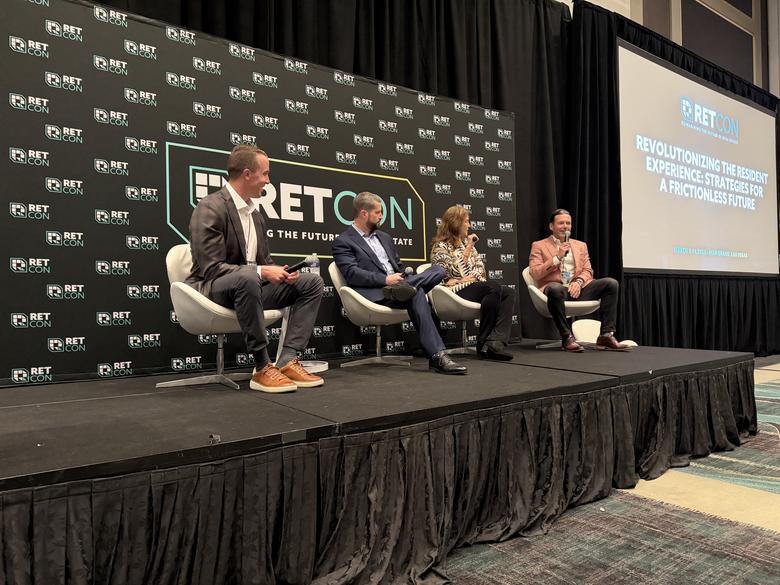 Panel: Revolutionizing the Resident Experience: Strategies for a Frictionless Future MGM Grand | March 10, 2026 | Room 156-157 | Moderated by Kevin Jacobson, CEO, Foxen The three o'clock hour on March 10 at RETCON 2026 drew a packed Room 156-157 for one of the conference's most practically grounded conversations. Moderator Kevin Jacobson, CEO of Foxen, guided four leaders from across the multifamily spectrum through a candid discussion on building the frictionless resident experience — not with buzzwords, but with operational specifics, frank admissions about where the industry still lags, and a few analogies (DoorDash, the Ritz-Carlton, and a grocery store automatic door among them) that will stick long after the session ended. Here is what was said. --- Mark-Taylor Companies | John Carlson, CEO Carlson opened with a quote that became the session's through-line: Fred Smith's FedEx maxim, "Automate the routine. Humanize the exception." For Mark-Taylor — a vertically integrated developer, third-party manager, and consultant with approximately 37,000 apartment units across Arizona — that philosophy is the operating system beneath every technology decision the company makes. People First: Mark-Taylor's strategic initiative by that name is not an HR phrase. It is the foundation upon which the tech stack is built. A five-star employee base produces a five-star resident experience. Technology earns its place by eliminating the friction that gets in the way of human service — not by replacing it. "If you can take out those friction points with the right tech, that's five stars." The Data: A 2025 rollup analysis of Mark-Taylor's centralized services produced a number that caused the company to rethink assumptions it had been making since 2019: 52% of all actual closed leases came through self-guided or virtual tours — without a traditional leasing agent present. The customer was already voting for self-service. Centralized services were then rebuilt to allow 83% of prospects to complete the full move-in process with minimal staff involvement, freeing human attention for the moments where it genuinely matters. The Analogy: Carlson's grocery store automatic door is the standard for ideal tech: it opens every time, without anyone thinking about it, noticed only when it breaks. If the technology layer reaches that level of invisibility and reliability, the human layer above it can deliver five-star service. If it does not, the human layer spends its energy managing the tech rather than the resident. Taylor AI: Looking 18 months ahead, Carlson described Taylor, Mark-Taylor's AI voice assistant, which is being built to know each resident's name, their pet's name, their birthday, their preferred amenities, and whether they want calls or texts. Taylor will act on that knowledge proactively — reaching out at the right time, in the right way. He sees DoorDash-level frictionlessness becoming an expectation from residents in the leasing process within a few years. Mark-Taylor was rated number one in the country by Power World Community for tenant experience in 2025. --- Gables Residential | Gigi Giannoni, Senior Vice President, CX and Marketing Giannoni brought 30-plus years of multifamily experience and a perspective that challenged the room on its most basic assumptions. Her opening argument: service quality has almost nothing to do with the quality of the building. "I can deliver great service whether I'm selling a VW Bug or a Maserati — it doesn't matter, because it's all about the interaction and building the relationship." A 1979 garden-style community can deliver five-star service. A brand-new Class A tower that fumbles basic resident interactions cannot. The industry confuses amenities with service, she argued — and that confusion is expensive. Platform Selection: On technology, Giannoni pushed back against the excitement cycle that often drives proptech adoption. Onsite teams — sometimes staffed by leasing consultants in their early twenties — need platforms they can actually learn and use. A key principle: select the platform that best serves your onsite teams so that they can do what they were hired to do, which is sell. Technology should transition staff out of administrative work and into relationship building. CRM as Ongoing Investment: Gables' CRM implementation taught them that a CRM is not a box to check. It is built over time, and the data it produces — properly entered, maintained, and analyzed — reveals what residents actually want. That data foundation enables choice and personalization at every price point. A resident paying $5,000 per month and a resident paying $2,000 per month both want choices. They just want different ones. Relationship Health: On renewals and retention, Giannoni drew a clear line: AI can handle administrative tasks and collect data, but relationship health — the kind that produces lease renewals, peer referrals, and five-star social media reviews — requires genuine human engagement. "When I get frustrated, I want to talk to a human being who can hear me and feel me." Her five-year prediction: a one-stop-shop model where moving companies, services, and everything tied to apartment living converges under one technology umbrella — simplified, technology-driven, but with human beings still present at the back end. On Wi-Fi as table stakes: A Gables building delivered on time and at target rents in Washington, D.C. launched with a serious Wi-Fi problem. The lesson went beyond infrastructure — it was about communication and problem ownership. Residents do not want explanations. "Wi-Fi is so typical now." Every property class, every price point, every market. --- Calix SmartMDU | Andrew Dunn, Regional Vice President Sales Dunn brought the infrastructure dimension — and a vendor's perspective on one of the most overlooked resident experience variables. Calix is a cloud and AI platform company focused on helping broadband service providers deliver experience-led connectivity to MDU properties through its SmartMDU product. Own the Infrastructure: Dunn's core argument was about ownership. Operators spend significantly on brand, finishes, and amenities — and then leave internet connectivity to a patchwork of consumer ISPs. "It's always kind of blown my mind that a new property will spend a ton of money on paint colors and smell design — and then leave internet for all of their residents working at home totally up in the air." When a resident has a connectivity problem, the ISP does not absorb the reputational damage. The property does. Managed Wi-Fi through a product like Calix SmartMDU gives operators ownership of that experience layer — one fewer variable that can undermine an otherwise strong brand promise. Work Backwards: On tech stack philosophy, Dunn aligned with the room: start with the desired resident outcome and select partners who help achieve it — and who can scale as expectations rise. Dashboard fatigue is a real operational problem. Too many systems drive staff to log into seven different applications. "More isn't bad, but start with the end in mind." Deliberate Partner Selection: For the five-year horizon, Dunn's advice was practical: be thoughtful now about which partners you build with. Select for purpose, fit, and scalability. The partners chosen today need to be positioned to deliver on whatever the future demands — even if the exact shape of those demands is still coming into focus. --- Foxen | Kevin Jacobson, CEO Panel moderator Kevin Jacobson also contributed a product design example that illustrated the session's themes at a granular level. Foxen's compliance technology handles renter's insurance policy submission, monitoring, and reporting for multifamily operators. Jacobson described a specific design decision: instead of accepting a policy submission by email with a potential two-day response window, Foxen built real-time API-based accuracy feedback so that a resident submitting a policy during move-in gets an instant confirmation — not a callback days later. "Those are the little moments where we're trying to make sure we're not getting in the way of a move-in or a really great resident experience." He reinforced the panel's theme of resident choice: phone, email, self-service, and live support should all be available simultaneously, on the resident's terms. Designing for the resident's preferred channel — rather than the operator's most convenient one — is the baseline. --- About RETCON 2026 RETCON — the Real Estate Technology Conference — returned to the MGM Grand in Las Vegas on March 9–11, 2026. The event brings together owners, operators, developers, and technology providers across the multifamily and commercial real estate sectors to explore how emerging technology is reshaping the built environment and the resident experience. We Get Around Network (WGAN) covers sessions, panel discussions, and conversations with key attendees throughout the conference. Panel: Revolutionizing the Resident Experience: Strategies for a Frictionless Future Moderator: Kevin Jacobson, CEO | Foxen Gigi Giannoni, Senior Vice President CX and Marketing | Gables Residential John Carlson, CEO | Mark-Taylor Companies Andrew Dunn, Regional Vice President Sales SmartMDU | Calix |
||
| Post 1 • IP flag post | ||
Pages:
1