





PMRE 2026 Panel: What Brokers and Agents Really Need21792
Pages:
1
 Owner, Managing Editor and Publisher of WGAN Forum and WGAN-TV Podcast Fairfield, California |
TomSparks private msg quote post Address this user | |
| Key takeaways - Brokers want partners, not vendors: someone who consults, brings ideas and pushes back "confidently, in a kind way." - Arrived after the marketing plan was set? Ask questions, shoot it their way first, then show them your way side by side. - Bring ideas beyond the listing: neighborhood and buyer-question videos that live on YouTube and keep working for the agent. - Troy Reierson: "Hospitality will beat AI every day." Anticipate your client's needs before they have them. - Shared responsibility on AI edits: Rob Jensen's team refused to remove a pole from a photo. "The buck stops here." - Preferred-vendor deals alone rarely bring work. Teach at sales meetings, give your best tips away free, and turn happy agents into your sales force. --- Real estate media companies and the brokerages they work with don't always see eye to eye, so PMRE 2026 put both sides on one stage. Moderator Lucy Edwards (Get Real with Lucy; sales and marketing, Premier Realty Services) asked two Las Vegas brokers, Troy Reierson, CEO of Berkshire Hathaway HomeServices Nevada, Arizona & California Properties, and Rob Jensen, CEO and broker of the boutique Rob Jensen Company, along with Vince Collura, founder of The Collective, a real estate media company he started a little over a year ago, what agents really need from their photographers and videographers. 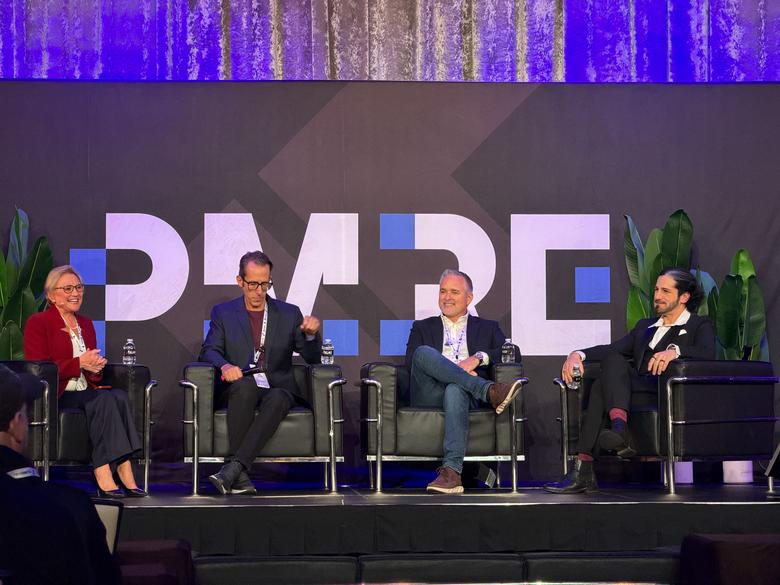 The panel on stage, moderator Lucy Edwards at left. Partner, not vendor The first two answers set the tone. Reierson: his best media partners are "engaged like a partner with the real estate professional." Agents know what they want to highlight, but they're on the other side of the camera, so consult, explain why, and push back when something isn't right. "How many people need more yes men in their life? None of us do. So push back confidently. Push back in a kind way, and you'll get to that table a lot faster." Jensen asked for quality, but mostly professionalism: clients want the house sold yesterday, so brokers need media pros who are responsive, communicate well and handle pick-up shots and changes without fuss. Collura, who started in the business in 2003, called that a huge change from the days when it was about "who can get there the quickest, the cheapest." He asked both brokers for the difference between a vendor and a partner. Jensen: a vendor is like a home inspector or a handyman, "go do your thing"; a partner is "a two-way street." Reierson: "I can pick anybody to be a vendor and get a service. But a partner, somebody I'm going to confide in and I'm going to trust in because I know that they have my success in their mind." When the plan is already made What if you arrive after the brokerage has already set its budget and packages? "It's salesmanship," Reierson said. Listen to their plan, thank them for it, then ask: are you really sold on walking through the front door with a camera like everyone else, or would you be open to something different? If they still want it their way, they're writing the check: "shoot it their way the first time," then shoot it your way and let them pick. "That gives you the credibility as that professional." Jensen wants ideas brought to him: flash photography, detail shots, something about the community or the light. "So much of real estate marketing is just copying everyone else," and even the newest AI video tricks stop standing out once every video has one. He also said almost nobody reaches out to his brokerage beyond random cold messages. Agents who are locked in with one photographer still need a backup, and the agents doing business in your market are a finite list. One more tip: when you add a new team member, brief them on each client's style before they show up. Content that keeps working Jensen's biggest opportunity goes beyond photos and video of homes. Tools like Answer the Public, Ubersuggest and ViewStats show what buyers and sellers are actually searching for, so pitch an agent ten videos about their farm area, a neighborhood or people relocating from a certain state. "The cool thing with video in particular is that it just lives on the internet," while mailers end up in the trash. Telling the stories of the people, places and communities is "just like an unlimited avenue of revenue," with pricing tiers by production value. Reierson doesn't use one media company across Nevada, Arizona and California; his agents choose their own. He cold-called a Las Vegas videographer who was new to the area, liked his answers on turn times and success stories, and has worked with him since. The ones who stand out bring ideas, like shooting B-roll of a group of agents at an open house, or an Arizona company that filmed an executive meeting and handed over the edited footage at no charge "just to let you know we're here." Collura learns from his clients too. A Chicago agent whose listings kept showing up in his social feed shared his home prep guide, which included a tip about taking the screens out of the windows. Collura added it to his own guide with a shout-out to the agent. "Vendors answer the question. Vendors give the pricing off the menu. Partners ask about what their goals are." And the math: "Ten partnerships with great clients will outweigh 30 or 40 customers that come to you transactionally." Will AI change the relationship? On AI, Reierson was blunt: agents are control freaks about their listings, and many will run photos through AI, then call you to fix what it did. His question to them: "Is that your highest and best use? Did you get into real estate to learn how to edit film, or did you want to help people create the American Dream?" If a task is worth $15 to $50 and an agent's time is worth far more, that's your pitch: we'll do it for $300, $500 or $1,500, "but if you picked up one more client, what would that do for you?" "You know what's going to beat AI? Hospitality." He recommended Unreasonable Hospitality by Will Guidara, who took Eleven Madison Park to the top of the world's restaurant rankings, and summed it up in one line: "Anticipate your client's needs before they need them." Do your research before you reach out, compliment an agent's last ten videos, and offer an idea or two. He also sees "AI fatigue": people can tell when something is AI-generated, which plays to media pros who direct, shoot and edit by hand. Edwards asked who is responsible when an AI edit stops reflecting reality. Jensen: "I'm going to take responsibility." A client recently asked his team to remove a pole from the background of a photo; they said no and picked different images instead. "The buck stops here. I think everyone should be responsible." Collura called it a shared, ethical responsibility: saying no to that request is acting in the best interest of your client, because the broker isn't there to intercede on every listing. Getting in the door The audience questions were the most practical part. A photographer said a preferred-vendor discount deal with a brokerage brought her no business. Reierson: walk in, say you're not asking for anything today, leave something small, and ask for a two-minute introduction to the broker or manager. Find their pain points (listings are sitting longer in Las Vegas and Phoenix) and say you have two ideas to help their agents sell homes faster. "I don't want to say ask for the business, but ask for the conversation." Jensen suggested offering a 20-minute talk at a sales meeting on getting more out of your photos, plus board of Realtors and title company events. Reierson added that sales meetings are usually Tuesdays, and to give your best content away: "They may never work with you, but you give out your best stuff for free. Everything else, you're gonna look like a genius." Headshots, branding sessions and event photography open doors too: agents love their brands. A post-production company asked about agents shooting listings on their phones. Berkshire Hathaway HomeServices has no written photo standard, since agents are independent contractors, but Reierson said "our best agents are using professionals," and the brokerage is trying a pay-at-closing media option for newer agents. He keeps preferred programs small on purpose: "If you put five to ten people out there, those five, ten people are all going to go broke." Two or three gives the media pros a real chance. The panel ran over time on a photographer's two frustrations: brokerages that set her price for her and want work for free, and agents who reuse her copyrighted photos for AI virtual twilights or hand them to builders and tile and cabinet companies. Reierson's advice: get video testimonials from the 100 agents you've worked with and let them be "your army. That's your sales force," and walk away from clients who won't respect your terms. On copyright, his general counsel raises it at weekly executive meetings: "If you got a hold of me, we'd have that ripped down immediately." A brokerage that doesn't care isn't your ideal client. Collura pointed out it's really a licensing question: what the agent's license covers, and what it doesn't. --- Panel: Beyond the Image: What Brokers and Agents Really Need Moderator: Lucy Edwards, Get Real with Lucy; Premier Realty Services Panelists: Troy Reierson, CEO, Berkshire Hathaway HomeServices Nevada, Arizona & California Properties; Rob Jensen, CEO and broker, Rob Jensen Company; Vince Collura, founder of a real estate media company Event: PMRE 2026, November 17, 2026 |
||
| Post 1 • IP flag post | ||
Pages:
1