





PMRE 2026: Oliver Ward on Building Your Perfect Tuesday21790
Pages:
1
 Owner, Managing Editor and Publisher of WGAN Forum and WGAN-TV Podcast Fairfield, California |
TomSparks private msg quote post Address this user | |
| Key takeaways - Oliver Ward runs two real estate media businesses, in Muskoka, Ontario and Nosara, Costa Rica, and started the second one by designing his "perfect Tuesday" first. - Costa Rica's high season runs while Ontario's is quiet: year one brought in about US$74,000 and took him from six profitable months to twelve. - Both businesses run the same way: a local partner photographer, HDPhotoHub, Giraffe360, the same editor and an outside company for quality control and morning uploads. - New markets open in person: one chance visit to an Engel & Völkers office led to a deal with the franchise's owner for the whole country. - The canoe test: "If you can't leave your business for three or four days, you don't have a business. You have a job." - Know your number: what your life costs, then build the business to produce it and buy back your time. "Money is renewable. Your time isn't." --- Oliver Ward started with a picture of himself five years ago: head in his hands on the couch, with "a decent real estate media business" that didn't excite him any more. His wife asked him to close his eyes and describe his perfect Tuesday, hour by hour: surfing in Costa Rica at dawn, breakfast with the kids, a few hours on sales, marketing and on-camera work while a team does the shooting, the beach at three, dinner with friends. Then she said, "Why don't we just build that?" In January, he said, that's exactly where his family will be. His PMRE 2026 talk answered three questions: how he did it, why, and "why run a real estate media business at all?" 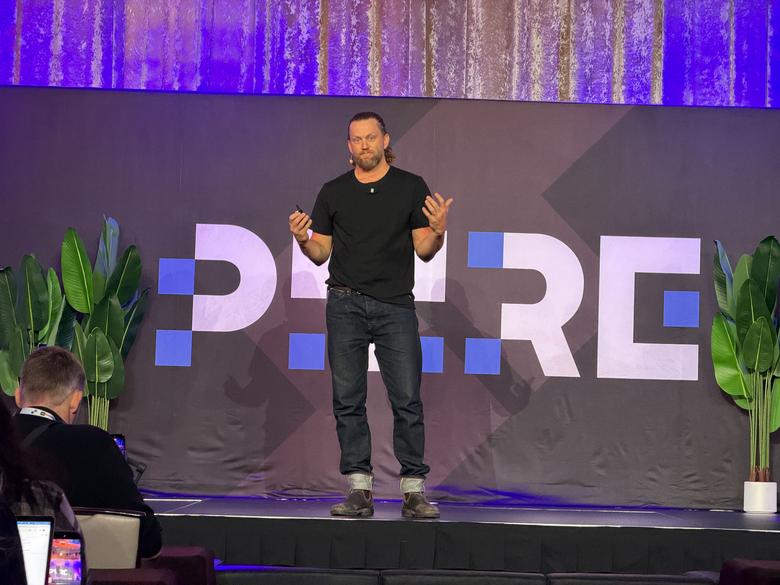 Oliver Ward on the PMRE 2026 stage. Two businesses, two countries Ward runs two real estate media businesses, one in Muskoka, Ontario, and one in Nosara, Guanacaste, Costa Rica. ("Those are not my houses. Those are the houses that we shoot."  People always ask how he started a business in Costa Rica; he wishes they'd also ask why, "because it is challenging." 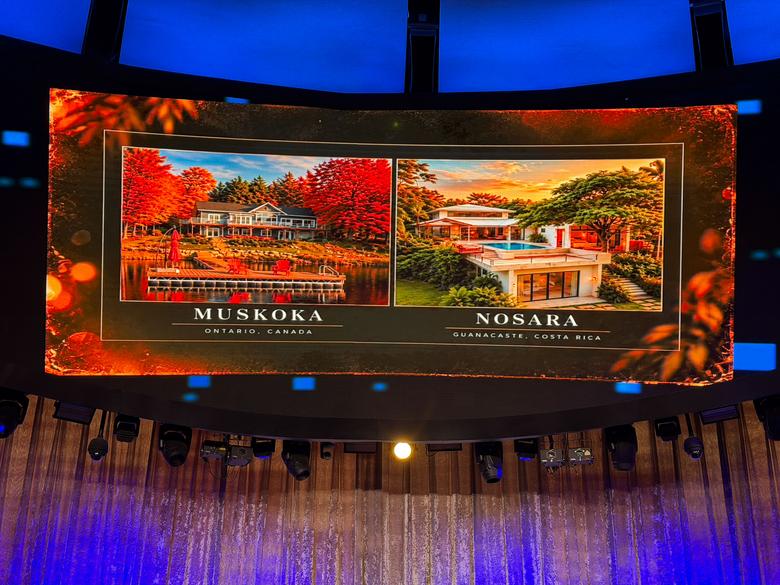 Muskoka, Ontario and Nosara, Costa Rica. The blueprint  The Blueprint. The blueprint started with one question typed into ChatGPT: how do I start a real estate media company in another country? The answer was four steps: a lawyer, a corporation, a national bank account, a registered Costa Rican accountant. "ChatGPT made it sound really simple." In reality it was "a maze through a jungle with broken bridges and flooded rivers"; one bank kept $5,000 of his money until he took legal action. "Because I had a strong reason why, I made it through." 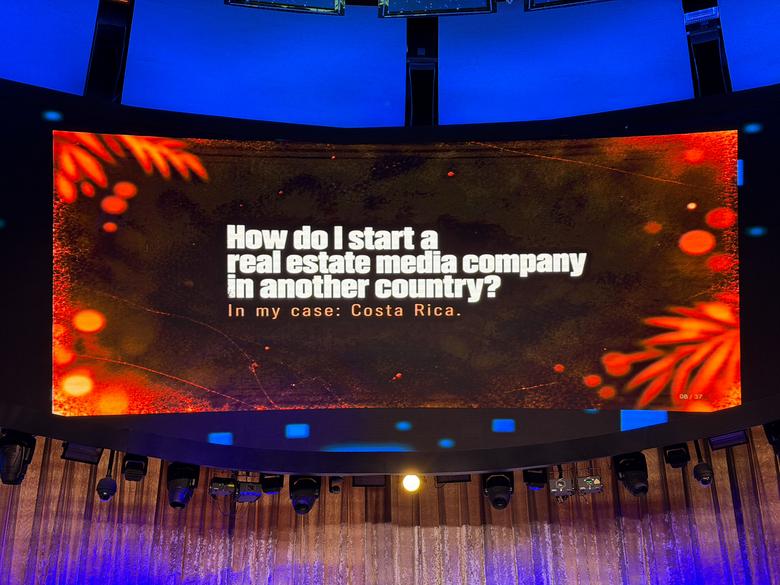 How do I start a real estate media company in another country? He hired local from the start. Sebastian, a Colombian-Costa Rican photographer with a business that was struggling, became his partner after about four months of training. (On an early shoot, Ward turned around to grab the drone and found Sebastian barefoot on the edge of an infinity pool, balancing for the shot: "I think we need to work on our communication." In year one, Ward and Sebastian made about US$74,000, roughly C$100,000. That mattered more than the number suggests. Ontario's season runs from May and then drops to about 10% of the volume; Costa Rica's runs from now to April. "I went from six profitable months to 12. I didn't really realize this going in, but it was a really big unlock for us." Setting up the company cost $3,625 in legal fees. Run it the same way in both places The two businesses are run as mirror images. HDPhotoHub handles booking, organization and delivery. A Giraffe360 camera does all the imaging except drone shots ("it's stuffed in our surf locker" . Tina, his editor of ten years in Winnipeg, edits both, and says the Costa Rican homes are like a vacation from four feet of snow. Quality control and the morning uploads go to an outside company, Core Media Operations, which will soon answer the phone too, "so no calls go missed."A surprise: in Costa Rica every invoice and expense carries the company's electronic invoice number (factura electrónica), all reconciled monthly. He expected a headache. Instead, with the corporation based there, the rented house, car, gas and groceries during their months in the country became business expenses: "the business really started supporting the lifestyle that we wanted to live." (He put the family's living costs there at about $7,820 a month.) Meet the agents in person How he lands clients, anywhere: "Nothing has a higher ROI than just meeting the agents in person." He believes that as technology becomes the same for everyone, the business will come down to relationships. After a surf session in a town they don't even serve, Sebastian walked into a RE/MAX office and walked straight back out. Together they tried the Engel & Völkers office next door; the agents shook their hands, and one booked them on the spot for a shoot three hours away, and asked to carpool. Six hours of small talk later ("I think it's a superpower" , she mentioned that she owns the Engel & Völkers franchise for the whole country. "You might be here thinking he just got lucky. But hippies like me, we call that alignment."His takeaway: everywhere has houses, everywhere with houses has agents, and agents everywhere need media. "If you're looking to grow, you can literally take this business anywhere. If you could, where would you want to be?" He didn't pretend it's easy: two weeks earlier Sebastian's car engine blew up with shoots booked, and from 6,000 miles away the fix was buying him an ATV. "Everything that we do is hard. If you've scaled past a million, that was probably hard. If you're a solo shooter doing everything by yourself, that's also hard." If the hard work isn't producing a life you're proud of, "why run a real estate media business at all?"  Why run a real estate media business at all? The why Then he got personal. He grew up in a house his Dutch mother made "gezellig," cozy: tea, long family dinners, conversation. His father was a Canadian Air Force pilot who chased submarines in the morning and coached basketball in the afternoon, and once took him surfing in Cornwall followed by a bacon and avocado sandwich he's "still chasing to this day." Both of his parents died of cancer. His father died five months after retiring from a career in the military, with everything he'd put off for retirement still ahead of him. "I think about that all the time." What he took from it: entrepreneurs protect, invest, track and negotiate for money, "but money is renewable. Your time isn't." The question he's obsessed with now "is not how big can I grow my business. It's what do I want to do with my time." He walked the room through its own perfect Tuesday: where you wake up, who's with you, what work you do, who you work with, how long you work, how much time you spend with the people you love. Defining that day and living into it, he said, is a bigger sign of success "than anything that entrepreneurship is teaching us to track." The hard part is allowing yourself to want what you want. Ask the business to fund your life Nobody's high school dream job was real estate media professional, he pointed out, and you don't need to be passionate about floor plans or QuickBooks. "But you do need to be passionate about what it can do for your lifestyle." Real estate media lets him live in Muskoka, take his family to Costa Rica, surf, and live on a single income. It's low-cost to start, trainable, has repeat customers, and can be solo or a big team. "Once I stopped asking real estate media to be my passion, I realized I could ask real estate media to help me live my passionate life." Entrepreneurs don't know what enough is, he said: fifty thousand becomes a hundred, then two hundred, then seven figures, and the business comes along on date night and to the kids' soccer games. His advice: figure out what your dream life costs. His costs C$136,753 a year in take-home pay. Once the business reliably produces that, every task he hands off (scheduling, editing, floor plans, delivery) is "buying back time," not paying for outsourcing. The canoe test The turning point was a friend's invitation to a canoe trip in Algonquin Park, with no phone reception, in high season. When Ward said he couldn't leave, his friend said: "If you can't leave your business for three or four days, you don't have a business. You have a job." Ward wrote standard operating procedures for every part of the business and left BJ, his second shooter, in charge. When he came back, the shoots had been delivered, invoices paid, and BJ had landed a construction company that has been on retainer ever since. "The business might have even run better without me." His filter for every decision now: does it get him closer to his perfect Tuesday, or further away? He closed with what his parents told him at the end. Not that life is short: "It was, you get one life. Use it well." Q&A In the Q&A, a photographer asked how he brought himself to hand off the daily work when it's hard to find someone who checks every box. Thinking you're the only one who can do it, he said, is a symptom of being a startup, and "rooted in a little bit of ego." The canoe test was a leap of faith: "I promise you, a lot of other people can do it," and if it had gone wrong, that would have shown him what to change. --- Speaker: Oliver Ward, real estate media business owner in Muskoka, Ontario, Canada and Nosara, Costa Rica Event: PMRE 2026, November 18, 2026 Figures as presented on stage. |
||
| Post 1 • IP flag post | ||
Pages:
1