






RETCON 2026 — Turning Renter Data into Smarter Decisions21501
Pages:
1
 Owner, Owner,Managing Editor and Publisher of WGAN Forum and WGAN-TV Podcast Fairfield, California |
TomSparks private msg quote post Address this user | |
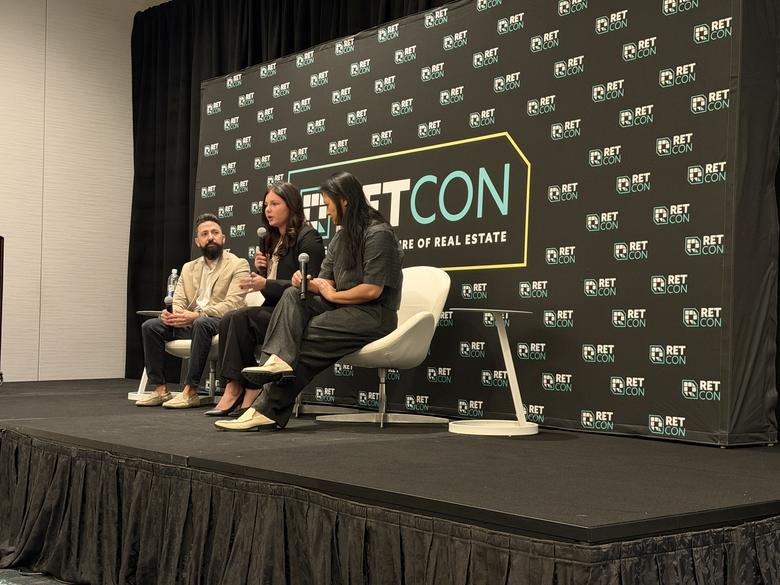 RETCON 2026 — Turning Renter Data into Smarter Decisions Hosted by Brian Miller, Director of Partner Experience and Engagement, Zillow Rentals Room 151 | March 10, 2026 | 10:35 AM One of the most grounded panel discussions of the conference brought three multifamily data veterans together to tackle a question that haunts every operator with a dashboard full of numbers: not how do you collect more data, but how do you put the data you already have into action? Zillow Rentals, Berger Communities, and Bozzuto each brought a distinct lens — external benchmarking, operational insight, and behavioral analytics — and together they painted a picture of what a genuinely data-driven leasing strategy looks like in 2026. --- Zillow Rentals — External Data & Consumer Trends | Brian Miller, Director of Partner Experience and Engagement Brian Miller opened the session as moderator and contributor, framing the central challenge: operators are drowning in data sets — external and internal — and the real skill is knowing which signals matter and what action they should drive. External Data as Market Context: Miller pointed to Zillow's own annual Consumer Housing Trends Report — drawn from nearly 30,000 resident surveys — as an example of the kind of third-party intelligence that can validate or challenge in-house assumptions. He encouraged operators to cross-reference their own data against macro signals like that report, noting that the insights are freely available at zillow.com/data and are localized down to specific communities. From Operator to Observer: Drawing on his own background on the operator side, Miller shared how he used to pull the previous zip codes from approved applications and map them — a simple technique that revealed exactly where qualified renters were coming from and what their trajectories looked like. The message: the richest data isn't always a new tool. It's often sitting in the application stack, unexamined. Find Zillow housing data and insights at zillow.com/data --- Berger Communities — Turning Move-Out Data into Leasing Policy | Hadley McKnight, Senior Operations Analyst Hadley McKnight brought Berger Communities' story of becoming, as she put it, "super obsessed with understanding our resident." The company's brand promise — rent shouldn't be hard — became both the North Star and the accountability standard for every data-driven decision the team made. US Census as a Starting Point: For repositioning work, McKnight described turning to the US Census first. When a student community faced closure after a nearby university shuttered, Berger used Census data to model average household income, home sale prices, homeownership rates, and household sizes in the target market. The data revealed that the local market would not support conventional rents, particularly for four-bedroom units, which led the team to pivot — identifying new university and program partners and repositioning the property toward a fresh student demographic. Move-Out Data as Product Development Fuel: Rather than treat move-out data as a post-mortem failure report, McKnight's team used it as a product roadmap. Top move-out reasons included home purchases and job or family transfers. The response became a full leasing flexibility program — including a 30-day guarantee, a partnership with realtors for residents purchasing homes, and a portfolio-wide transfer policy that allows residents to move to any Berger community, no questions asked. The transfer policy, born from data on transient renters, also became a powerful closing tool for the leasing team. ILS Performance by Retention: McKnight described adding a retention lens to ILS analysis. Rather than asking only which ILS drives the most leads or best lead-to-lease conversion, her team also asks: which ILS source produces residents who stay longer and renew more often? Layered against concession data by source, this analysis reveals the true cost-per-retained-resident from each listing channel. Credit Card Payment Rate as a Leading Indicator: One of the session's most original KPIs came from McKnight: tracking the percentage of residents paying rent by credit card versus direct bank transfer. When credit card payment rates rise — at a property level, market level, or portfolio level — Berger has found it reliably predicts increases in delinquency and bad debt. The action that follows: tighten screening criteria before the delinquency spike materializes. --- Bozzuto — Behavioral Data and the Why Behind the What | Xiyao Yang, SVP of Digital Xiyao Yang framed Bozzuto's approach with a clean taxonomy: third-party data gives you context; first-party data gives you insight. And within first-party data, there are two types that need to work together. Quantitative vs. Qualitative First-Party Data: Yang distinguished between the numbers — leads, views, conversion rates, tour completions — and the text-based signals that explain them. Surveys and reviews are the "why" layer behind the metrics. When the same complaint appears repeatedly in reviews, it may signal an operational issue. When amenity spaces are mentioned consistently, that is a capital investment signal. When resident experiences are inconsistent across properties, that points to a training gap. The qualitative layer explains what the numbers are telling you. Intent vs. Actual — The Tour Scheduling Gap: One of Yang's most striking behavioral findings: when Bozzuto analyzed click patterns on their tour scheduling calendar, prospects were heavily clicking same-day and next-day tour slots. But the actual tours being booked clustered around the third day. That gap between intent and behavior revealed two opportunities — either the leasing team's calendar wasn't offering enough near-term availability, or virtual and self-guided tour options needed to be surfaced earlier in the conversion funnel. The Missed Call Window: Yang's team also analyzed missed call data by time of day and discovered that the peak window for missed calls is one hour before the office opens and one hour after it closes. Prospects and residents call when the office is dark. The insight triggered an operational question: is the answer better communication about office hours, or is it introducing a voice AI solution to capture those calls? Either way, it's a concrete action derived from a behavioral data point that most operators had but weren't scrutinizing. Building the AI-Ready Data Infrastructure: Yang made a point that resonated across both operators: the first-party data infrastructure being built today is not just about current analytics. It is the foundation that will power AI functions in the near future. Getting the data clean, connected, and categorized is pre-work for AI — and it is work that needs to happen now. --- The Bigger Picture: Renter Data in 2026 This panel made a strong case that the most valuable data in multifamily is rarely the newest data. It is the data already in your systems — move-out reports, payment method trends, tour calendar click patterns, missed call logs, ILS source reports — that goes unanalyzed because teams are focused on collecting rather than acting. The shift that all three panelists modeled was from data as reporting to data as decision infrastructure. When you know why residents leave, you build programs to retain them. When you know when they call, you staff accordingly. When you know how they pay, you screen for it. The data is already there. The question is whether your team is asking the right questions of it. Companies and Speakers in This Session: Zillow Rentals — Brian Miller, Director of Partner Experience and Engagement Berger Communities — Hadley McKnight, Senior Operations Analyst Bozzuto — Xiyao Yang, SVP of Digital |
||
| Post 1 • IP flag post | ||
Pages:
1