






RETCON 2026: 3/10/26 Keynote21496
Pages:
1
 Owner, Owner,Managing Editor and Publisher of WGAN Forum and WGAN-TV Podcast Fairfield, California |
TomSparks private msg quote post Address this user | |
 RETCON 2026 – Las Vegas, NV Morning Keynote Session | March 10, 2026 Hosted by James Shearin, Managing Director, RETCON RETCON 2026 opened its morning keynote in Las Vegas with a session that set the tone for the entire conference: the industry is no longer asking whether technology can add value — it is asking how leaders build organizations that can actually absorb, trust, and sustain it. Three back-to-back presentations delivered by Marc Ehrlich of Rose Associates, Josh Albrechtsen of RealPage, and a high-powered CEO panel moderated by Margette Hepner of Bilt gave attendees a rare ground-level view of what AI adoption, operational transformation, and bold strategic thinking look like from the executive seat. --- Legacy in Motion: Leadership, Innovation, and Growth at Rose Associates Marc Ehrlich, President | Rose Associates Marc Ehrlich took the stage to celebrate a milestone that almost no multifamily company in North America can claim: one hundred years of continuous operation. Rose Associates was founded by two brothers and is today led by the third generation, Amy Rose — making it a certified woman-owned business. The New York City-based company manages 35,000 units across a Philly-to-Boston footprint, growing from 14,000 units just ten years ago. It operates both as a self-manager of its own portfolio and as a third-party manager for owner clients, a business line that traces its origins to the banking crisis of the 1970s, when distressed lenders turned to Rose for help managing repossessed assets. Ehrlich described the company's technology journey as having begun roughly ten years ago — "when we were ninety," he said — when leadership recognized that homegrown systems could no longer scale and that national providers were beginning to encroach on New York City's historically insular market. The impetus was not just operational; it was competitive. Rose Associates had long considered itself best in class, but realized that status was slipping in the areas of reporting and technology. Change Management: Ehrlich was candid about the challenges. The company distributed copies of Who Moved My Cheese? to every employee, held town hall meetings, and ran workshops to prepare the organization for change. Resistance, surprisingly, was minimal — but fatigue was not. "We kept using the term 'change,'" Ehrlich said, "and 'change' has a connotation that it's one and done. But it's not. This is a metamorphosis — a perpetual progression." He acknowledged that framing technology adoption as a one-time event was a significant misstep, and one that burned people out over time. New York Nuances: Rose Associates manages approximately 35,000 residential units alongside several million square feet of commercial space, much of it tied to affordable housing programs with compliance requirements unique to New York. Educating technology providers on these nuances required "countless hours" from Rose's own teams — a cost Ehrlich described as making him "nauseous to this day." The lesson: resist the urge to force an existing mindset into new technology, and instead engage with the intellectual capital that providers bring from their national experience. Infrastructure Investment: The company built out an IT department and a dedicated learning and development team of six, whose Monday morning routine includes onboarding new employees, ongoing training, and reinforcing technology adoption across the portfolio. Ehrlich noted that these are largely unreimbursed expenses at the management company level, which complicates the profitability calculus — a point he made with characteristic honesty. AI Strategy: Rose Associates holds AI strategy meetings virtually every day. Ehrlich said the company is building an internal AI chat solution that draws on its own proprietary data before reaching out to public models, ensuring that client and owner information is never inadvertently exposed. He emphasized that AI literacy cannot be an executive-level project — it must be driven from the bottom up, by the team members who will actually use it. "Understanding how to utilize AI," he said, "is going to be like Excel. You don't need to be an expert, but if you can't use it, you won't get the job." On Growth: Technology has enabled Rose Associates to maintain quality controls across a rapidly expanding portfolio. KPIs tracked through dashboards and business intelligence platforms give managing directors real-time visibility into leasing response times, performance metrics, and property-level results. "We couldn't have done it without technology," Ehrlich said, adding that growth itself has become a motivating force for staff — people want to be part of something that's expanding, and technology adoption is positioned as the path to career marketability, not job displacement. --- The First Wave of AI Resident Agents: Trust, Workflows, and Future of Operations Josh Albrechtsen, SVP & GM, Integrated Front Office | RealPage Josh Albrechtsen opened with a direct acknowledgment: his team has been building and launching the first AI agents in the multifamily market as part of RealPage's Lumina AI Workforce platform, and he was there to share — with transparency — what has worked, what has not, and what the industry needs to understand before it deploys AI at scale. The Trust Question: Albrechtsen reframed the core challenge facing the industry. The question is no longer whether AI adds value in multifamily — that has been demonstrated. The question is whether the humans who work alongside it, and the renters who interact with it, will grow to trust it. He argued that trust is the foundational ingredient in any operating model that pairs AI agents with human teams. The Renter's Journey: RealPage maps the renter's journey from initial inquiry through renewal or move-out. It's a relationship defined by inherent tension: operators want to qualify renters; renters want effortless experiences. Consumer expectations have risen rapidly, with 24/7 availability now the baseline expectation — emergencies don't wait for business hours, and neither do qualified prospects. What AI Does (and Doesn't) Do Well: Albrechtsen was clear that RealPage does not believe AI will replace all on-site staff. Where AI excels is in intelligence, availability, and scalability. Where humans remain essential is in judgment, nuance, and genuine human connection — "the ability to look someone in the eyes," he said, which no robot or chatbot will replicate for the renter choosing their next home. Lessons from the Field: Albrechtsen shared several real examples from Lumina AI deployments. In one case, an AI phone agent picked up Mandarin from a television playing in the background and began responding in Mandarin to an English-speaking caller. In another, an AI responding to a renewal inquiry deployed the phrase "fresh deeds" — which, in a high-pressure collections scenario, could have been damaging. In an SMS rent-collection thread, the AI applied pressure by referencing a renter's previous late fee — technically accurate, but tonally off. Each of these cases pointed to the same conclusion: AI is a powerful teammate, but it must be monitored, fine-tuned, and partnered with humans who bring nuance and judgment. On the positive side: during a major East Coast snowstorm, RealPage's AI network handled emergency work order requests at 60 percent above projected volume, with every request responded to and routed within two minutes. Staff Sentiment: Internal surveys showed 89 percent of RealPage users believe AI will improve communication with prospects, and 91 percent expressed overall positive sentiment toward AI. One memorable example: an irate resident sent an expletive-laden email and the AI patiently worked through it — ultimately resolving the issue — to the visible relief of the on-site team, who were glad they didn't have to handle it. Operating Model Design: The most important principle Albrechtsen shared: deliberately design the roles of AI and human team members. When one customer's rollout team feared job displacement, RealPage helped build messaging that clearly defined what AI would do and what staff would do — and the result was their best-ever product rollout. "AI is one of the first technologies that takes work off of your team's plates," he said, freeing staff for the human-connection work that actually differentiates a property. Governance: The session closed with a discussion of the scaffolding required around AI models — including evaluators (AI systems that audit AI outputs before they reach the consumer), fair housing compliance checks, ADA requirements, fee transparency, and an AI operations center that monitors outputs and can intervene. Albrechtsen's three action items for attendees: pair human and AI teams deliberately, engineer trust operationally, and start with structured workflows before tackling complex scenarios. --- High-Stakes and Bold Moves: Strategies for the Next Era of Real Estate Walt Smith, CEO, Avenue5 Residential | Bill Shopoff, President & CEO, Shopoff Realty Investments | Kendall Pretzer, CEO, Grace Hill | David Schwartz, CEO & Chairman, Waterton Hosted by Margette Hepner, President Housing, Bilt Margette Hepner brought together four industry CEOs for a candid conversation about what has fundamentally changed in the way real estate leaders make decisions — and what they are doing about it. A Different Business Environment: David Schwartz of Waterton described the shift starkly. Five years ago, multifamily was riding a decade-long streak of appreciation, driven by cap rate compression and strong rent growth. Today, cap rates have expanded, rent growth has slowed, and the entire industry has pivoted to a single question: how do we grow net operating income? Walt Smith of Avenue5 Residential echoed the sentiment, noting that operators now manage three things — buildings, people, and technology — and the third leg is the most unfamiliar and challenging for leaders with long industry tenures. From Data to Knowledge: Bill Shopoff of Shopoff Realty Investments offered a historically grounded perspective. When he began his career, site selection required a physical visit and a paper aerial map from a local store. Today, every piece of data is available on a desktop — but the challenge has shifted from access to interpretation. "The overwhelming thing today is: how do we decipher all that data and turn it into actual knowledge?" he said. His team uses AI to build better financial models and is exploring every integration it can to improve the customer experience — including a master plan approach that delivers experiential retail not for the retail revenue, but for the incremental rent premium it creates across the residential units. Digital Value Add: Schwartz pointed to technology as a new category of value-add investment — one that delivers NOI growth without the $25,000-per-unit cost of a full physical renovation. He cited Built's rent rewards platform, which has processed hundreds of millions of dollars in rent payments and allowed residents to redeem millions of loyalty points for airline miles and hotel stays. "What a great investment to reward our residents," he said, noting that these digital amenities improve retention and renewals without requiring a kitchen upgrade. Training and Data as Action: Kendall Pretzer of Grace Hill pushed back on the idea that data alone is enough. Her company sits at the intersection of resident surveys and workforce training, and her core message was that data must translate to action — or it is meaningless. The Grace Hill platform closes the loop between resident feedback and on-site training, triggering best practices and learning workflows automatically when survey results indicate a gap. Survey credibility, she noted, depends entirely on residents believing their feedback will be acted on: "Gosh, based on your feedback, we fixed the potholes between building three and four — if I see that, then I'm going to believe you." The Human Element: The panel closed with a lightning round. Walt Smith said staffing plans have completely changed and that empowering young leaders is the new imperative. David Schwartz noted that the industry is returning to normalized interest rates after a decade of extraordinary capital markets. Kendall Pretzer said the blend of technology and human connection is what organizations must get right. And Shopoff delivered what may be the conference's most quotable line: "You're not going to get replaced by AI, but you're going to get replaced by somebody else who can use AI better than you." Margette Hepner added her own challenge to the industry: real estate has clung to the "one per hundred" staffing model for too long, operates on banker's hours in a world where prospects search for apartments in the middle of the night, and is still building buildings the same way it did decades ago. The industry that figures out how to evolve all three will be the one that wins the next era. --- About RETCON RETCON is the real estate technology conference for owners, operators, developers, and innovators in the multifamily and commercial real estate industry. RETCON 2026 was held in Las Vegas, Nevada on March 10, 2026, and featured sessions on AI adoption, operational transformation, platform consolidation, and the future of resident and workforce experience. Companies and Speakers Featured in This Session: Rose Associates – Marc Ehrlich, President RealPage – Josh Albrechtsen, SVP & GM, Integrated Front Office | Lumina AI Workforce Avenue5 Residential – Walt Smith, CEO Shopoff Realty Investments – Bill Shopoff, President & CEO Grace Hill – Kendall Pretzer, CEO Waterton – David Schwartz, CEO & Chairman Bilt – Margette Hepner, President Housing (Moderator) RETCON – James Shearin, Managing Director (Host) 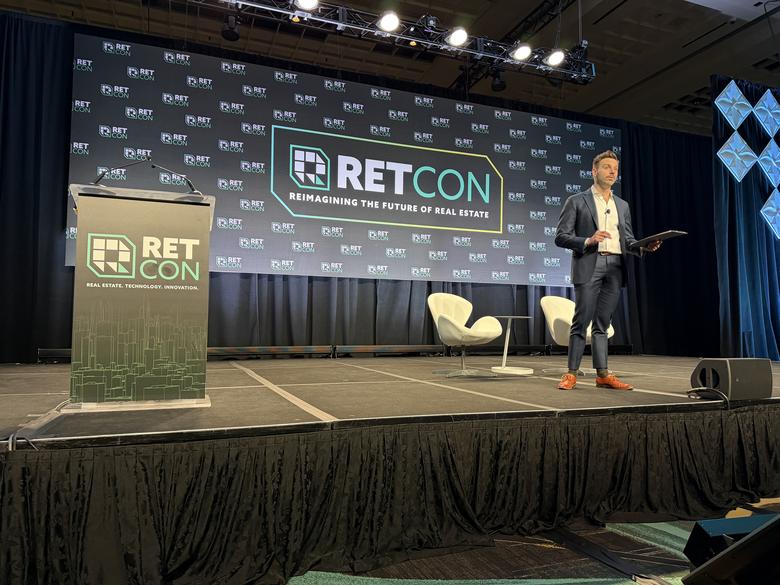 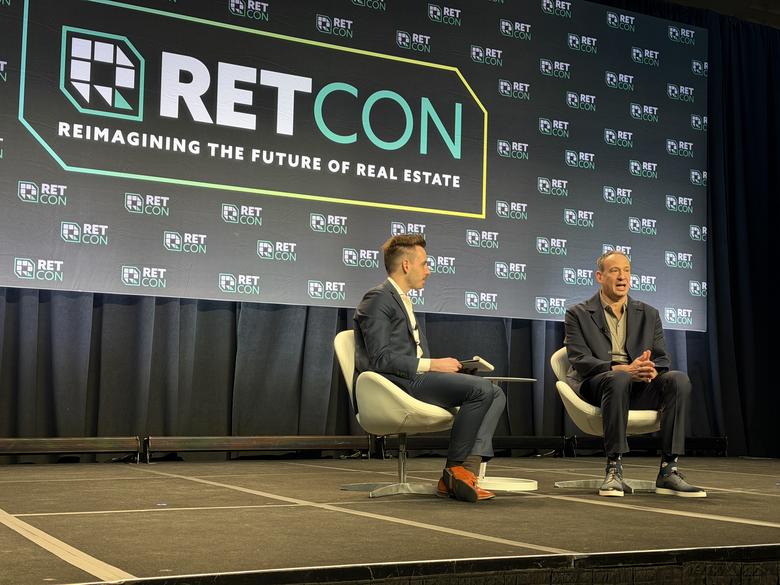 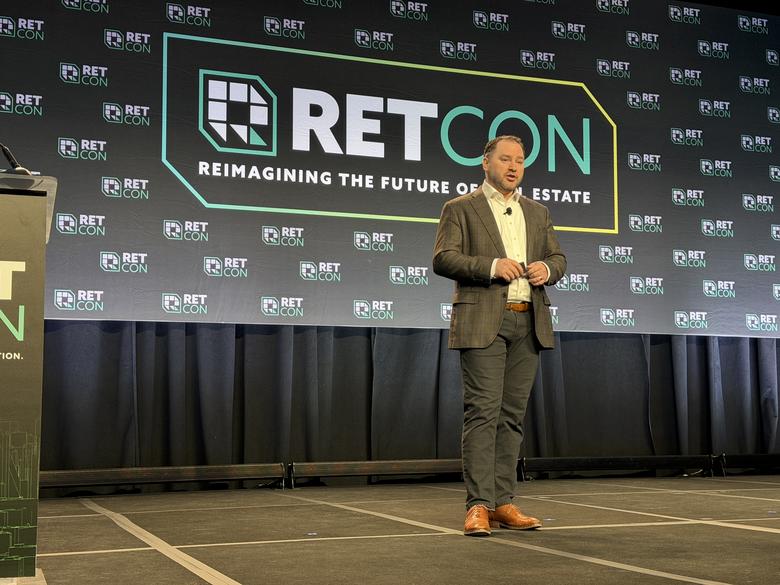 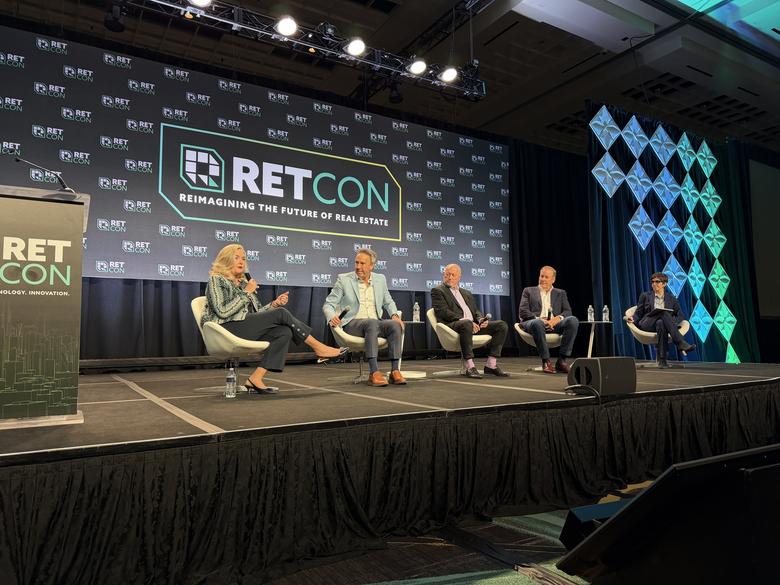 |
||
| Post 1 • IP flag post | ||
Pages:
1