






School Archive Project in Japan21384
Pages:
1
 WGAN WGANStandard Member Osaka, Japan |
Meidansha private msg quote post Address this user | |
| This one is for you @ron0987 Below is the translated blog from my website. You can see the Japanese original with photos at the link below: https://meidansha-co.com/nishinomiya-hyogokenritsu-3d-scan-project/ Capturing the Memories of a Closing High School: The Hyogo Prefectural Kabutoyama High School 3D Scan Project Hello everyone. I’m Daniel Brown from Meidansha Inc. My company's concept is "Enriching lives through next-generation visuals." My goal is to help connect digital space with the real world through technology. This autumn, I had the privilege of assisting with a truly rewarding project at Hyogo Prefectural Kabutoyama High School. This was part of a Nishinomiya City initiative where students took the lead in 3D scanning their entire school building to preserve it for the future. For this project, I (Daniel John Brown from Meidansha), along with Mayumi Yoshino from Imagebean LLC and Hirokazu Mitoma from Mikaduki Planning Co., Ltd., provided the technical guidance to the students. 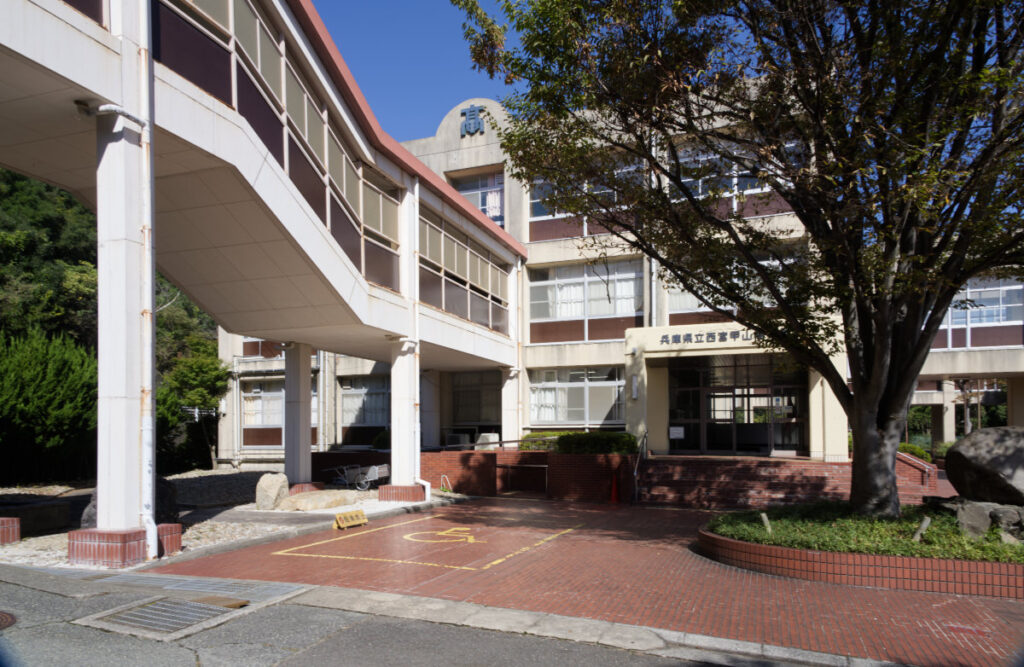 Archiving a School Before Its Farewell The Kabutoyama High School building was constructed in 1983 as a "Mammoth School" and was designed to accommodate over a thousand students. However, it is scheduled to close in March 2027. The purpose of having the students capture the entire building in 3D was three-fold. Firstly, to demonstrate to Nishinomiya City and its residents the practical application of 3D spatial scanning for archiving public facilities. Secondly, to give residents themselves the opportunity to use this technology. Most importantly, the third reason was to preserve the school building—which will disappear after the current students graduate—as a digital record of their memories. With the student body now smaller (down to 247 students), the school felt vast. When I asked one student if there were any haunted spots, she laughed and said that "everywhere is haunted". Even at 4pm on a school day the building was eerily quiet… 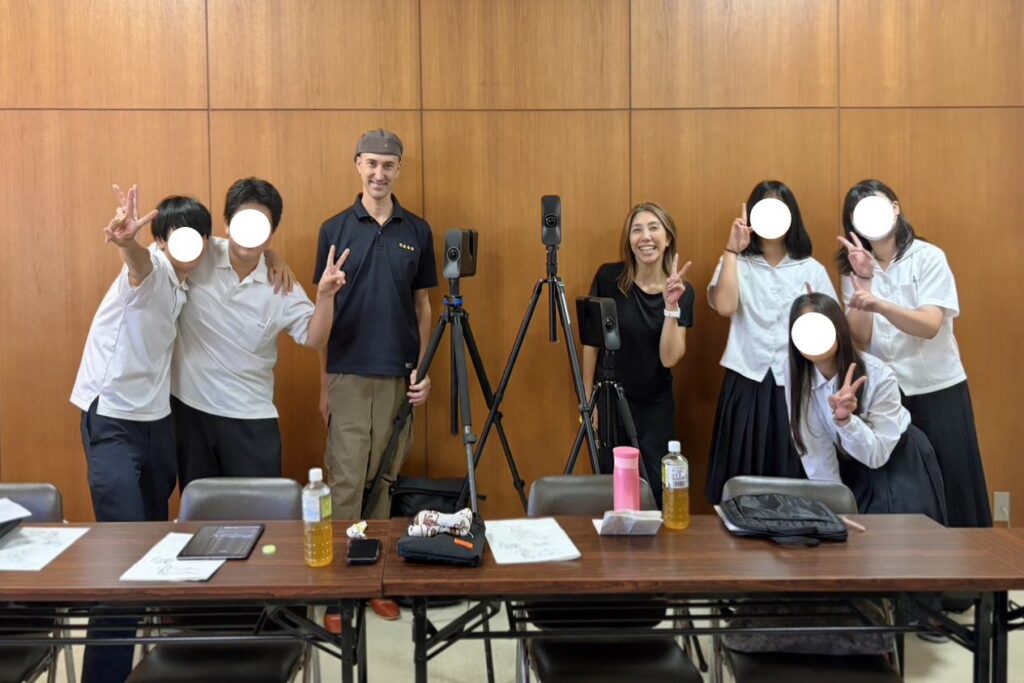 Children’s Intuition and Curiosity The most fulfilling and rewarding part of this project for me was watching the students learn. We had prepared detailed lectures based on our past projects. However, once the scanning started, the students picked it up incredibly quickly—it took only about 15 minutes of demonstration before they began asking intuitive questions. For instance, they started asking how to properly join hallways to classrooms, assuming there might be an issue with connections—without me even explaining the complexity of linking different rooms. One student even tried adjusting the scanner's height because he assumed it wouldn't accurately capture the space above a tall locker. Their unrestrained curiosity and "what if?" approach was truly refreshing. 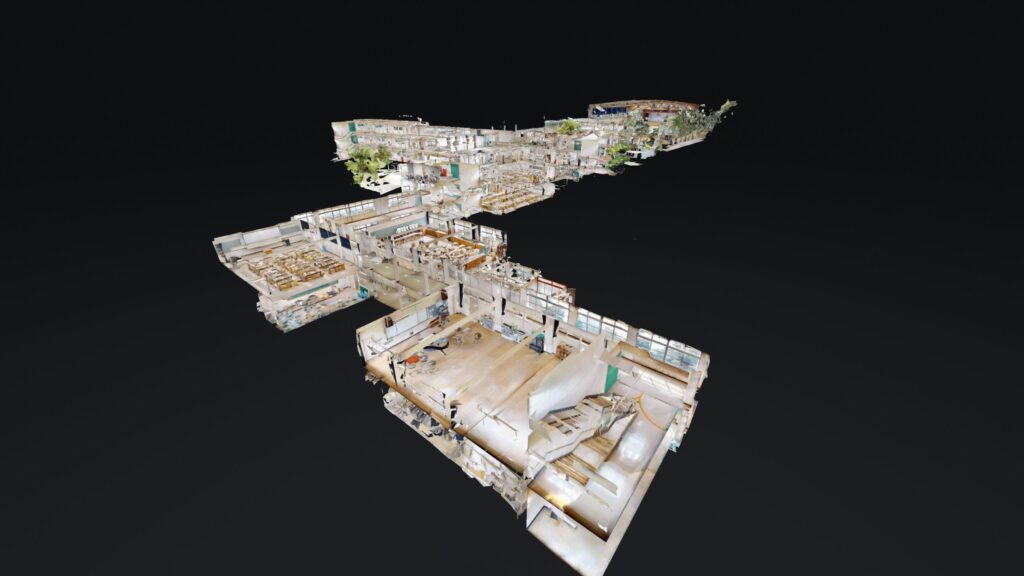 Learning from Trial and Error Although usually the lecturers work alone, to allow as many students as possible to participate, we divided the school into four sections and had four separate teams scan different wings simultaneously. The plan was to use Matterport's merge function to combine these four independent scans later. This simultaneous approach was attractive for saving time. However, during post-production, we hit the limits of the merge algorithm. Misalignments, especially in vertical connections like staircases (a common feature in Japanese public schools), proved very difficult to correct. Mr. Mitoma and I ultimately had to rescan some problematic areas on another day. We finally solved the issue with the difficult staircases by using MPEmbed, a third-party tool, to create an "invisible portal" that the user can click to instantly move between floors. This trial and error was not a failure. We learned precisely how the new merge algorithm works and discovered its current limitations, reaffirming my personal conclusion: for consistent high-quality data and minimal post-production effort, scanning is most efficiently performed by a single team with one laser scanner. 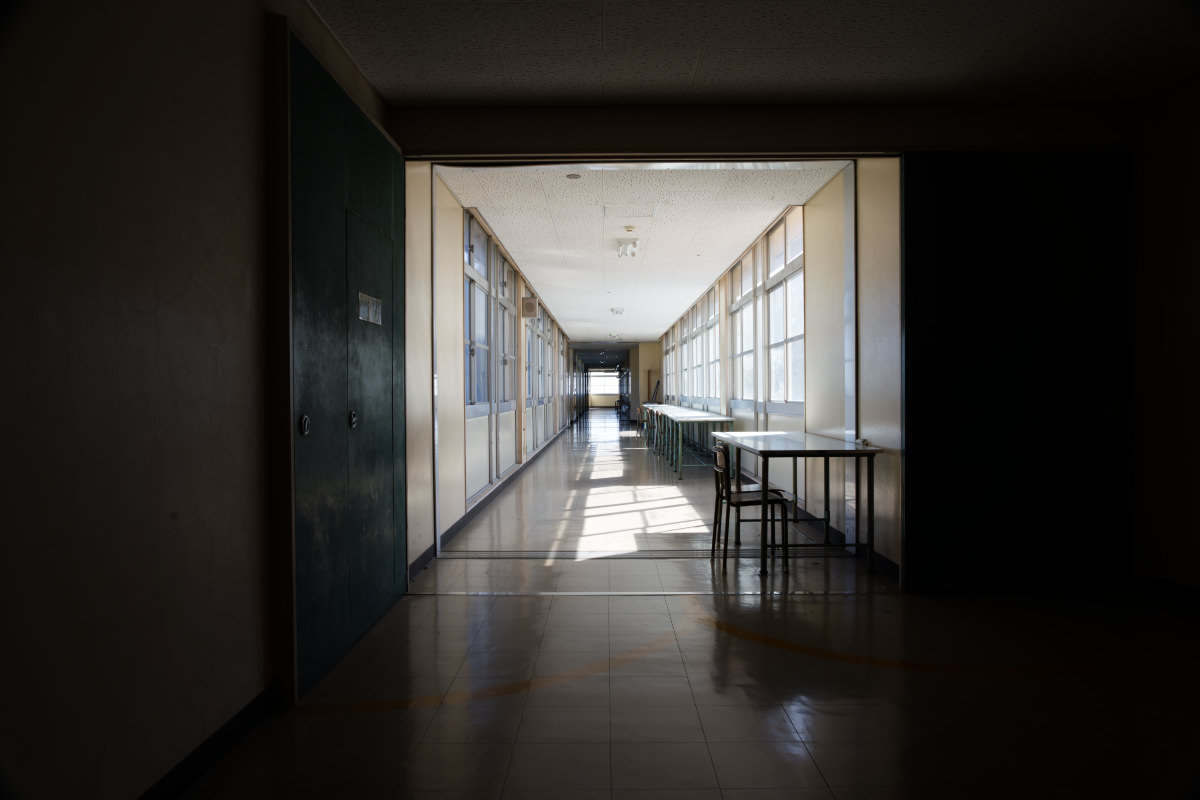 The Significance of Archiving Public Assets Various community members joined us, including a blogger and a photographer from Nishinomiya Style, and two Nishinomiya City councilors, Hitoshi Hamaguchi and Fuko Isshiki, both of whom were graduates of the high school. In an era of shrinking population in Japan, maintaining and keeping track of public assets will become increasingly difficult. The example set by Kabutoyama High School shows how combining innovative technology training for youth with the preservation of public assets can create new job opportunities while safeguarding communal heritage. I hope the digital memory created by these students will serve as a valuable example for others looking to archive public spaces and inspire the next generation of spatial technologists. <Project Participants> Imagebean LLC (Mayumi Yoshino) Mikaduki Planning Co., Ltd. (Hirokazu Mitoma, Yuichi Mizutani) Fuko Isshiki (Nishinomiya City Councillor) Hitoshi Hamaguchi (Nishinomiya City Councillor) Nishinomiya Style (Local Media) |
||
| Post 1 • IP flag post | ||

|
ron0987 private msg quote post Address this user | |
| @Meidansha this is a great project and it is looking good. Good luck in the future and what a way to give back. | ||
| Post 2 • IP flag post | ||
|
WGAN Standard Member Osaka, Japan |
Meidansha private msg quote post Address this user | |
| Thanks @ron0987 We are getting better at merging. We are also considering other technologies like Realsee |
||
| Post 3 • IP flag post | ||

|
JamesG private msg quote post Address this user | |
| @Meidansha Such a cool project, thanks for sharing! @ron0987 Kudos for your generous contribution to the project/program! |
||
| Post 4 • IP flag post | ||
Pages:
1